Personal Trainer for Weight Loss: What Coaching Actually Changes
A personal trainer for weight loss will not burn the fat for you, and the workouts alone usually move the scale less than people expect. What a good trainer changes is everything around the workouts: you show up more often, you lift hard enough to keep your muscle while you lose fat, and someone checks your progress honestly. Those are the parts most people struggle to do alone.
Key Takeaways
- Exercise at the recommended amount may produce up to about 2 kg of weight loss on its own, with big differences between people (Swift et al., 2014). That is why a realistic plan pairs training with changes to what you eat.
- Coaching helps most with consistency. In a 10-week trial, 88.2% of the group training with a coach in person completed at least 85% of their sessions, against 52.2% of the group following a plan on their own (Gavanda et al., 2025).
- Strength training while you eat less protects what you want to keep. Strength still improves, but muscle gains slow down, so the calorie cut should stay moderate (Murphy and Koehler, 2022).
- Keeping a record helps. Across 22 studies, tracking food, exercise or weight was consistently linked with more weight loss (Burke et al., 2011).
- A trainer is not a doctor or a dietitian. Medical questions go to your doctor first.
What can a personal trainer for weight loss actually change?
Three things, mainly: how often you train, how well you train, and how honestly you measure.
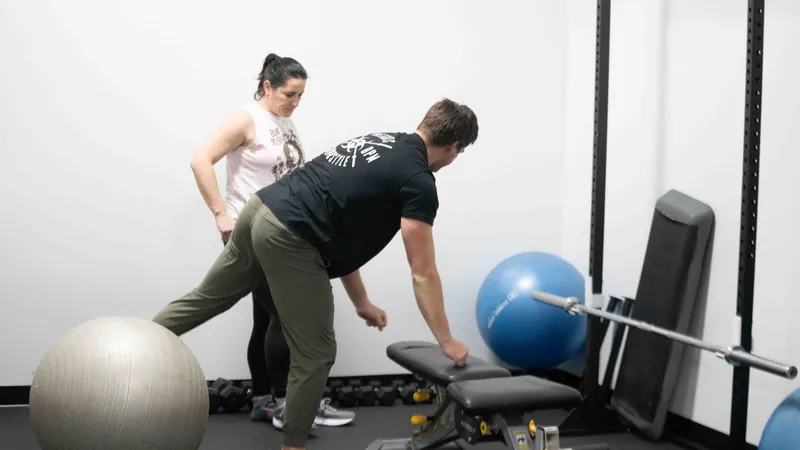
Most people who want to lose weight already know roughly what to do. They need to eat a little less than they burn, move a little more, and keep it up for months. The hard part is the keeping it up. A trainer turns a plan into appointments, adjusts the program when life gets in the way, and notices when progress stalls before you quit out of frustration.
A trainer also changes the quality of the work. Left alone, many people pick weights that feel comfortable and stop sets early. Under supervision, the load goes up when it should, your form stays safe, and each session has a purpose beyond burning calories.
Why do workouts alone not move the scale more?
Because exercise burns fewer calories than most people assume.
A review of exercise and weight loss found that, unless someone does a very large amount of aerobic exercise, it is unlikely to produce weight loss big enough to matter medically. Programs that meet public health recommendations may produce up to about 2 kg of weight loss, and the result varies a lot from person to person (Swift et al., 2014). The same review stresses that exercise brings many health benefits even when the scale does not move.
That is not a reason to skip training. It is a reason to set honest expectations. If someone promises that their workouts will melt off weight with no change to what you eat, be careful. A realistic plan pairs training with a modest change in food that you can live with for months. The training protects your muscle and your health while the food changes the number.
For the food side, our guide to losing weight sustainably goes deeper.
Does having a trainer help you stay consistent?
Yes, and this is where the evidence for coaching is strongest.
A 2025 randomized trial put adults who already lifted weights on the same 10-week, three-days-a-week strength program, delivered three ways: with a trainer in person, through an app, or as a plan on paper they followed on their own. The researchers counted how many people in each group completed at least 85% of their sessions: 88.2% with the trainer (15 of 17), 81.2% with the app and 52.2% with the paper plan (25 of 47). Among the 79 people who finished, the group with the trainer also gained significantly more squat strength than the other two (Gavanda et al., 2025).
Three limits matter. These people already trained, so they were not beginners, the coached group was small, and the study measured strength, not weight loss. Still, the pattern is the one that matters for anyone trying to lose weight: people with a booked session and a coach expecting them kept showing up far more often than people working from a plan alone. Weight loss takes months, so showing up week after week matters more than any single perfect session.
How does strength training help when you are losing weight?
It helps you lose fat rather than muscle.
When you eat less than you burn, your body can lose muscle along with fat. In one small two-week study of 10 overweight adults on a reduced-calorie diet, they lost 1.5 kg of fat-free mass, which includes muscle, when they had 8.5 hours in bed each night, and 2.4 kg when they had 5.5 hours (Nedeltcheva et al., 2010). Resistance training gives your muscles a reason to stay. A review of strength training’s health effects reports that inactive adults lose 3% to 8% of their muscle mass per decade, and that ten weeks of resistance training may add about 1.4 kg of lean weight while removing about 1.8 kg of fat (Westcott, 2012).
There is a catch. A meta-analysis of strength training done while eating less than you burn found that strength gains held up, but muscle gains were smaller than in people who were not cutting calories. The authors advise people who want to keep their muscle during weight loss to avoid cutting more than about 500 calories a day (Murphy and Koehler, 2022).
In practice, this is where coaching is worth paying for. A trainer keeps the strength work progressing while you diet, watches for signs that the calorie cut has become too aggressive, such as strength dropping week after week, and steers you back to a pace you can hold.
Why does tracking matter so much?
Because a written record removes the guesswork about what you ate and what you did.
A systematic review of 22 weight loss studies found a consistent link between self-monitoring (tracking food, exercise or body weight) and weight loss. The authors rate the evidence as weak because of how the studies were designed, but the direction is consistent (Burke et al., 2011).
A trainer makes tracking easier to keep up. Your sessions, your lifts and your check-ins become a record you did not have to build alone, and someone reads it with you. When progress stalls, the record shows where to look: missed sessions, weights that stopped climbing, or a few weeks where food drifted.
What can a personal trainer not do?
A trainer cannot change your food for you, cannot make up for short sleep, and cannot diagnose a medical problem.
- Training supports weight loss, but the calorie side lives in your kitchen. Some studios offer nutrition support alongside training. MOV-U has a nutrition coaching page if you want to ask what is available.
- The Canadian 24-Hour Movement Guidelines for adults pair at least 150 minutes a week of moderate to vigorous activity and muscle strengthening at least twice a week with 7 to 9 hours of good-quality sleep (CSEP). Training cannot replace the sleep.
- If you have a health condition, take medication that affects your weight or appetite, or are pregnant, talk to your doctor before you change how you eat or exercise. A good trainer will ask about this at the start and work within what your doctor advises.
How do you know if a trainer is right for your weight loss goal?
A trainer is a good fit if your main problem is consistency, confidence in the gym, or knowing what to do with weights. A trainer is a poor fit if you are hoping workouts will replace changes to what you eat.
Before you sign up anywhere, ask:
- How do you combine strength training with weight loss, and how do you adjust when someone is eating less?
- How do you track progress besides the scale?
- What happens when I miss a week?
- What do you do if I have an injury or a health condition?
- Can I try a session or talk it through before I commit?
Our longer post on whether a personal trainer is worth it covers the money side honestly, including when you do not need one.
Weight loss coaching at MOV-U in Edmonton
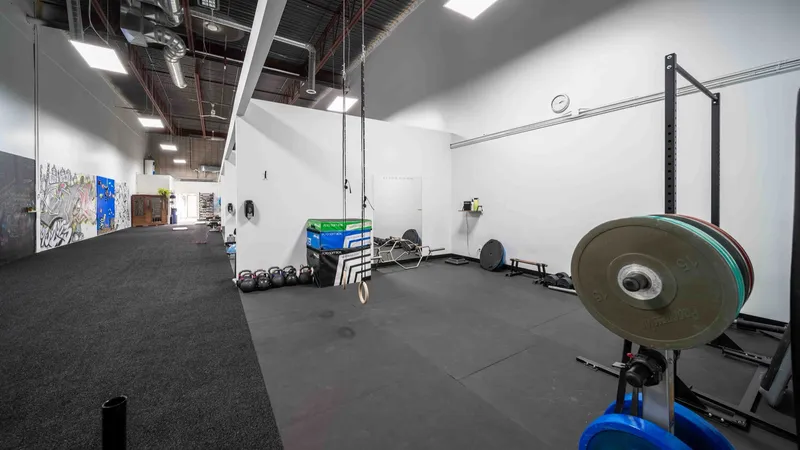
MOV-U is a private personal training studio in Edmonton offering one-on-one, small group and couples training. You can read about how training works there on the personal training page and see what clients say on our reviews page.
Kerri Bodie’s own path into training started with losing weight through morning workouts and nutritional changes, and weight loss is one of the goals listed on Kerri’s trainer page.
If you want to talk through your goal before committing to anything, book a free consultation.