Strength Training: A Complete Guide From Beginner to Stronger
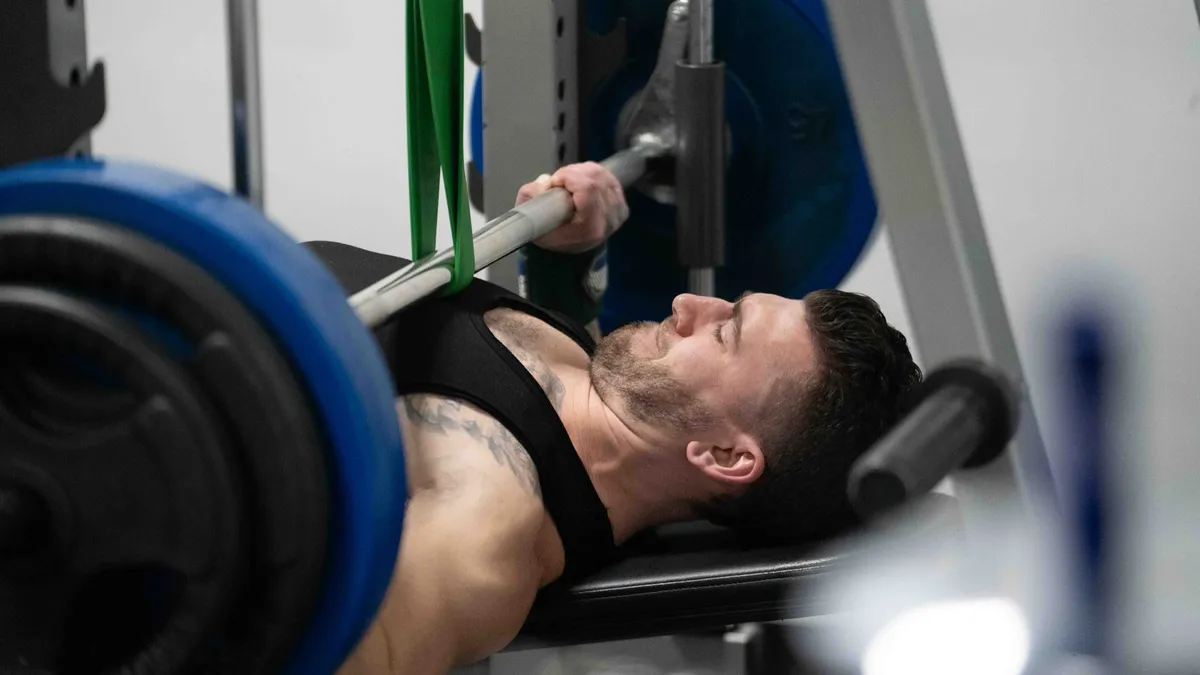
Strength training is any training that makes your muscles work against resistance that gets harder over time. The minimum is small: a couple of sessions a week that cover the major muscle groups. Everything else, the load, the sets, the exercise list, is a detail you adjust to fit your goal and your week.
This guide is the conversation we have with someone who already knows they should lift. It covers the whole subject once, in plain terms, with the evidence linked where it first comes up.
Key takeaways
- Twice a week, major muscle groups. That is the floor set by the Canadian 24-Hour Movement Guidelines. Everything above it is optimization.
- Your goal decides the load. The 2026 ACSM position stand ties strength gains to heavier loads, while muscle growth responds to a wide range of loads.
- Failure is optional. Stopping a rep or two short of failure builds muscle about as well as grinding to the last rep.
- Seven movement patterns cover almost everything: squat, hinge, horizontal push, vertical push, horizontal pull, vertical pull and carry.
- Sessions completed beats program design. A good plan you skip loses to an ordinary plan you run.
What is strength training, and what counts?
Strength training is repeated muscular work against resistance, organized so the demand increases over time. Resistance training, weight training and strength training are used interchangeably. The ACSM position stand describes the resistance as anything from free weights and machines to bands, water or your own body weight. What makes it strength training is the structure, not the hardware.
That definition settles arguments before they start. A loaded carry is strength training. A set of push-ups taken close to your limit is strength training. Thirty minutes on a stationary bike is excellent for other reasons, but it is not muscle-strengthening work.
The ACSM position stand pulled together 137 systematic reviews covering more than 30,000 participants. It states that “resistance training is safe for healthy adults of all ages.” Its recommendations are written for healthy adults as a group, and its authors note that separate guidance for groups such as older adults may come later.
The case for strength training beyond the weight room
The reason to lift is rarely the lifting. A 2022 meta-analysis of 16 cohort studies found muscle-strengthening activities were associated with a 15% lower risk of death from any cause. People who did both muscle-strengthening and aerobic activity, compared with neither, had a 40% lower risk.
Those are observational associations across populations, not proof of cause and not a prediction about you. Read them as a reason the guidelines ask for strength work at all. The same analysis found a J-shaped curve, with the largest risk reduction at roughly 30 to 60 minutes of muscle-strengthening activity a week.
The everyday version is simpler: stairs, groceries, getting a bag into an overhead bin, getting up off the floor. Those are the things most people actually notice.
What are the movement patterns worth building a program around?
Seven patterns cover almost everything worth training: squat, hinge, horizontal push, vertical push, horizontal pull, vertical pull and carry. Choose one exercise per pattern that you can do well with the equipment you have, and you have a complete program. Exercise selection is a smaller problem than most people think.
The useful distinction is compound versus isolation, and it is purely mechanical. A compound exercise crosses two or more joints and works several muscle groups. An isolation exercise crosses one joint and biases one muscle. Compounds are the efficient backbone of a program because they cover more muscle per minute, which matters when you have two sessions a week rather than five.
Isolation work still earns a place. It is the right tool when one muscle is lagging, when a joint tolerates a smaller range than the full compound movement, or when you simply like the exercise, which matters more for sticking with it than any set and rep scheme.
What equipment do you actually need?
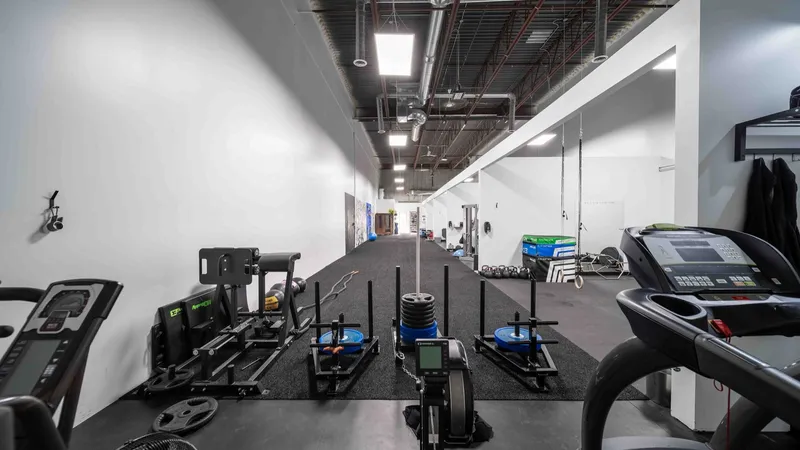
Less than you think. A 2023 meta-analysis of 13 studies with 1,016 participants found no difference between free-weight and machine training for strength or muscle growth in the direct comparison, although strength gains were specific to the kind of equipment used in the test. The ACSM position stand likewise found strength gains were not affected by free weights versus machines. Body weight counts as resistance too. What you genuinely need is resistance you can increase in small steps, and a way to record what you did.
The practical constraint is increment size, not equipment type. Progress needs a next step small enough to be achievable. If the lightest jump available to you is 5 kg on a given exercise, adding load is a blunt instrument, and you are better off adding a rep, slowing the lowering phase, or adding a set.
So if your gym has machines and no barbells, train the patterns on machines. If you have a pair of dumbbells at home, train the patterns with dumbbells and progress reps and sets harder than load.
How do you keep getting stronger once the beginner phase ends?
Progressive overload means increasing the demand over time, and load is only one of the levers. Reps, sets, tempo, range of motion, rest and how close you go to failure are all available. Beginners improve on almost anything. Progression is what answers month eight, once easy gains have run out.
The ACSM position stand found progression “is not necessary to achieve beneficial outcomes,” and that increasing the stimulus is “likely a requirement only for those seeking continued longer term progress.” Consistent training will make you stronger without any formal scheme. It will not keep doing so forever.
The common failure is not laziness. It is running simple week-to-week weight increases long past their expiry date, then treating the stall as a personal failing. The fix is smaller jumps, longer timelines, and changing which variable you progress.
None of this works without a record. Weight, reps, and a quick note on how hard the last set felt. Three columns is enough, and the log is what turns guessing into deciding.
Does your goal change how you should train?
Yes. Maximal strength, muscle size and general health pull the variables in different directions. Load matters a great deal for one, much less for another, and not at all for the third. Knowing which column you are in prevents most wasted training.
| Variable | Maximal strength | Muscle size | General health and function |
|---|---|---|---|
| Load | Heavier wins. ACSM ties strength gains to loads at or above 80% of a one-repetition maximum | A wide range of loads works, from heavy sets of 8 or fewer reps to light sets of more than 15 | No load target |
| Reps per set | Lower, on main lifts you can control | A wide range works when sets are taken reasonably close to failure | Enough that it feels like work with your form intact |
| Weekly volume | 2 to 3 sets, at least twice a week | 10 or more weekly sets per muscle group, with 12 to 20 proposed for young, trained men | Two sessions covering the major muscle groups |
| Frequency | At least 2 sessions a week | Twice a week per muscle is an easy way to fit the weekly sets in; total weekly sets matter most | At least twice a week |
| Reps in reserve | Leave a few in reserve on heavy sets | 1 to 3 reps left on most sets | Stop well short of your limit |
| What decides success | The weight lifted, judged over months | Hard sets accumulated over months | Sessions completed out of sessions planned |
Two caveats. The 12 to 20 weekly set range comes from a review of trained men aged 18 to 35, so treat it as a ceiling to grow into rather than a starting point. And the columns overlap in practice: a beginner chasing any of them should train much the same way at first.
How much training does muscle growth actually take?
Less than the internet implies, and more consistently than most people manage. The clearest finding is volume: the ACSM stand found muscle growth enhanced by 10 or more weekly sets per muscle group. A 2022 review proposed 12 to 20 weekly sets for young, trained men, a narrower group than it is usually quoted for.
How you spread those sets is flexible. The ACSM stand found that training frequency, from once a week to more than five days a week, did not change muscle growth when total weekly volume was the same. An older 2016 meta-analysis of ten studies did find that training a muscle twice a week beat once a week when volume was equated, and its authors said whether three times beats twice remains to be determined. The newer, larger overview is the safer read: total weekly volume is the main lever, and twice a week is an easy way to get it.
Load and failure matter less than people fear. In a network meta-analysis of 28 studies, muscle growth looked load independent, while strength gains favoured heavier loads. A review of 15 studies found no evidence that going to momentary failure beats stopping short. Most of the suffering people associate with building muscle turns out to be optional.
Sleep, food and rest days belong in the same conversation. Treat them as part of the program, not extras.
Where do you begin if you have never lifted?
Train two or three times a week, full body, around the squat, hinge, push, pull and carry patterns. Pick weights that feel almost too easy. Finish every set with two or three reps still in reserve. Then change one variable at a time and give yourself eight weeks before you judge anything.
Spend the opening sessions learning the shapes of the lifts rather than chasing weight. Load comes easily once a movement looks the same every time you do it.
Soreness is a poor scorecard. Some good sessions leave no trace the next day, and heavy soreness can simply mean the dose was too big for now. Your logbook is the better judge.
A missed week does not undo your progress. Pick up at the weights you last handled well. If you want to see how a first session with a trainer runs, what to expect at your first personal training session walks through it.
Strength training for women: what the evidence actually shows
A 2025 Bayesian meta-analysis of 29 studies of healthy adults aged 18 to 45 found relative increases in muscle size were similar between sexes after the same program. Absolute gains slightly favoured men, in the upper body but not the lower body. The authors read this as women having a similar potential to build muscle as men, particularly relative to where each person starts.
The practical consequence is that there is no separate women’s program. Strength still responds to heavier loads. Size still responds to accumulated volume. “Toning” is not a separate training method. Light weights and high reps are a valid choice if you prefer them, and they are not a requirement.
What does differ is the surrounding context. Pregnancy, returning to training after giving birth, and bone health after menopause each need individual advice that a general guide cannot give.
What changes about strength training after 40?
Less than the marketing suggests. Load, volume, frequency and progression work the way they always did. What changes is how much recovery the work needs and how costly it is to train through a small problem.
The evidence on older adults is encouraging. A meta-analysis of 25 studies of healthy adults with a mean age of 70.4 years found resistance training improved strength substantially, and two sessions per week produced the largest strength effect.
Where age changes decisions is in the margins. Change one variable at a time. Treat the warm-up as a gradual ramp. And a small ache you would have ignored at 25 is worth raising in week one.
Training through an Edmonton winter
Edmonton’s movement year is seasonal in a way that quietly wrecks training plans. Walking, cycling, river valley trails, yard work and league sport all shrink when the weather turns, and for a lot of people that removes most of their weekly activity at once. Indoor strength training is the piece that does not care about the sidewalk.
A 2007 analysis in the Canadian Journal of Public Health, using 2004 survey data from 20,197 Canadians aged 19 and older, found that 64% of Canadians were inactive in winter compared with 49% in summer. That is older data describing Canadians nationally rather than Edmonton, but the shape will be familiar to anyone who has lived through a February here.
A meta-analysis of 103 studies found that stopping resistance training reduced every measure of muscular strength it looked at, and that the loss grew with the length of the break. The effect was larger in people over 65, and the loss in maximal force and power was larger in inactive people than in recreational athletes. The longer the gap, the more there is to make up, which is why a lot of people spend every spring rebuilding instead of progressing.
So winter is not the season to hold on until the weather breaks. It is the season when strength work is the training most likely to keep happening.
The practical part is friction, not willpower. Book a standing time, pick somewhere on a route you already drive, and keep the plan small enough that a missed session is an inconvenience rather than the end of it.
Signs the training is working before the scale moves
Body weight is a slow and noisy measure of strength work. Better evidence sits in your training record: a load you can now lift more times, a heavier load for the same reps, or a movement that looks steadier than it did.
Outside the gym, notice what gets easier: carrying groceries up the stairs, lifting a child into a car seat, standing up from the floor. And count how many planned sessions you actually completed, because that number drives everything else.
Judge a program after two or three months of logged sessions, not after two weeks. In the first month the real question is whether the schedule fits your life.
When is a coach worth it, and when is a plan enough?
Written plans work well for people who can follow them, move without pain and keep honest notes. A coach becomes useful when one of those slips, or when you would rather hand the day-to-day choices to someone else.
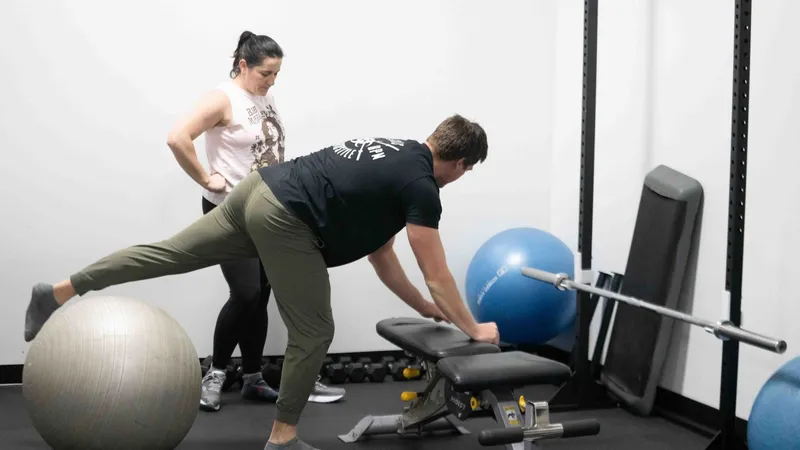
The gap is feedback. A page cannot notice a knee drifting in or a hip shifting under load, and it cannot assess you. It can give you a structure. A trainer watching the set can fix the rep in front of them.
The other thing coaching takes off your plate is the decisions. Which weight today, whether to push or hold, when to change a variable, what to do about a tweak. Those decisions are small one at a time and relentless together. Our guide to personal training in Edmonton covers how to evaluate a studio and what to ask, and what semi-private personal training is explains the format we use.
Strength training at MOV-U in Edmonton
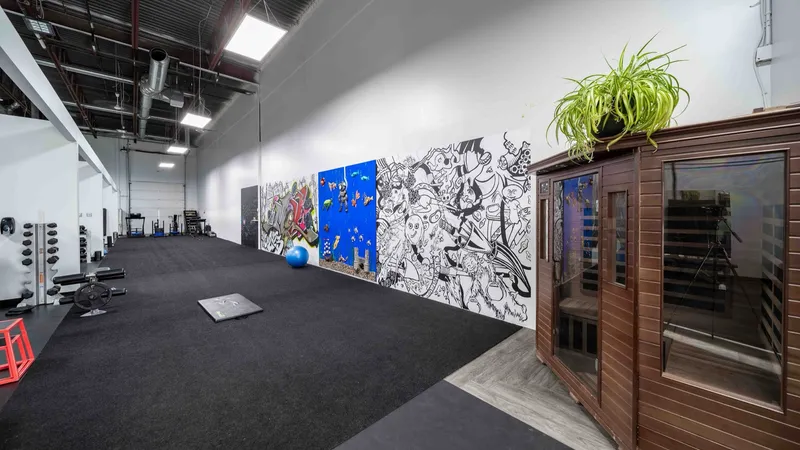
MOV-U is a semi-private personal training studio at 4906 93 Ave NW in Edmonton, owned by Mackenzie Clarke. You can meet the whole team before you book anything.
If you are starting or restarting, say so up front, and mention any injury or condition you are working around so your trainer can plan for it. See how personal training works, book a free consultation, or get in touch.
Frequently asked questions about strength training
If you have a medical condition, take medication or are pregnant, check with your doctor before you change your exercise or diet.
Is strength training the same as weight lifting or bodybuilding?
Strength training is the general category: repeated muscular work against resistance that increases over time. Weightlifting and bodybuilding are competitive sports with their own lifts and judging. You can train for strength your whole life without competing in either.
How many days a week should I strength train?
Two or three is a sensible starting point, and the ACSM stand found strength enhanced by two or more sessions per week. Two full-body sessions are easier to keep than four specialized ones.
Do I need to lift heavy to get results?
It depends what you are chasing. For muscle size, not necessarily, because light and heavy loads both build muscle when sets are hard. For maximal strength, largely yes, because heavier loads produce bigger strength gains. For general health, there is no load target at all.
How long before I see results from strength training?
Give it eight to twelve weeks of logged sessions before you judge. Watch the log first, because visible change depends on a great deal besides training.
Do I need a gym to start strength training?
No. Free weights and machines produced similar results in the research above, and body weight counts as resistance. What you need is resistance you can increase in small steps and a record of what you did. A gym mostly buys smaller increments and more options.
Should I strength train if I have an injury or a health condition?
Ask a doctor or physiotherapist first, and be specific about what you want to do. The PAR-Q+ screening questionnaire is a starting point: it clears people who answer no to every question and routes the rest to follow-up questions or a qualified exercise professional. If something hurts during a lift, stop and get it looked at.
Is it too late to start strength training?
No. The research on adults in their sixties and older found substantial strength gains, with two sessions a week working best. Starting later changes how you manage recovery, not whether it works.